Rolling out KyberDeck to a team: devices, identities, spares
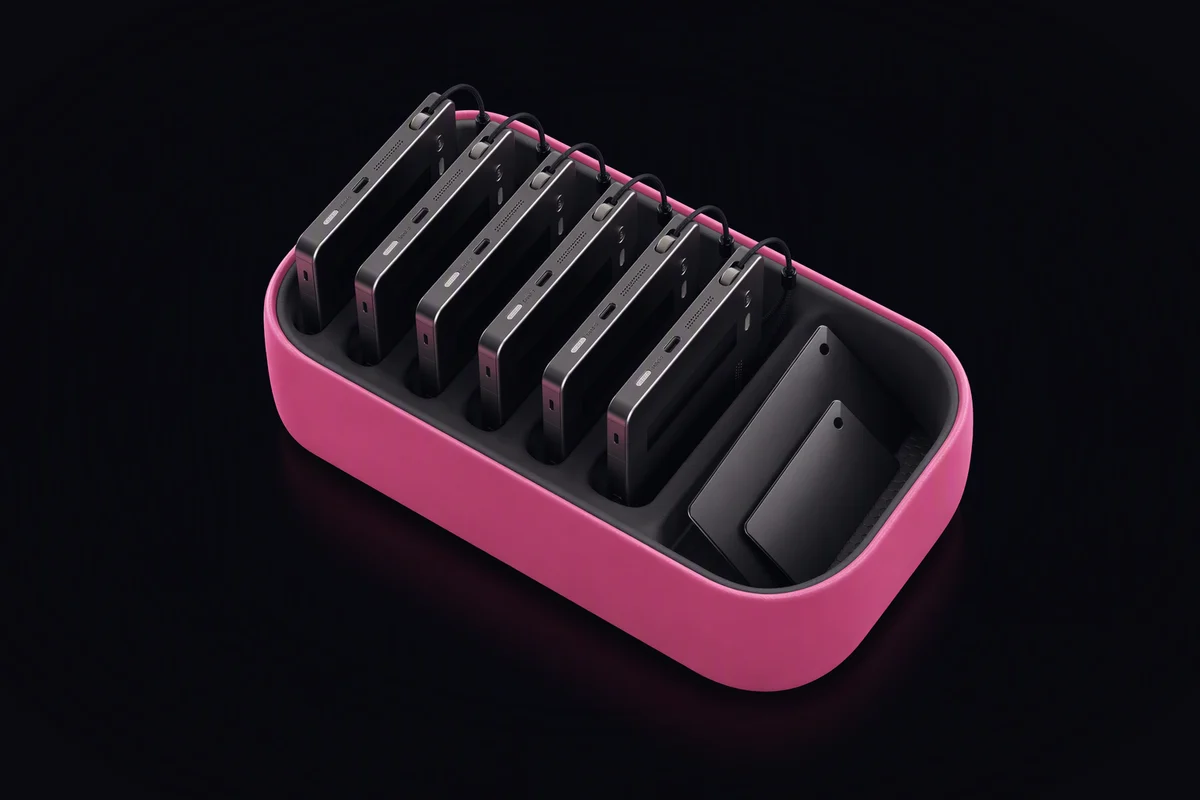
Picture a building-supplies wholesaler with eighteen people: eight in the warehouse, four drivers, a counter and an office. The plan is good. Bands for the warehouse, so pick lists sit on the wrist and hands stay free. Cards for everyone, for identity and for the stockroom door. A Pocket for the salesperson who visits building sites. A Node in the back office as the server.
The rollout is a box on the counter on a Monday morning. Everyone takes a device and sets it up themselves. Two pickers swap Bands after lunch by accident and spend the afternoon confirming each other’s picks. A driver leaves at the end of the month, and his Card still opens the stockroom in the next one. On Thursday a Band is dropped on concrete, there is no spare, and that picker goes back to paper, so the warehouse has two stock figures again.
The wholesaler is hypothetical, and KyberDeck is still in design. This is how we intend a rollout to work once there is something to roll out.
The real cause: devices treated as gadgets
A device that opens doors, confirms stock movements and speaks for a person to the company’s system is not a gadget. It is an identity with a battery. Rolling devices out to a team is an identity project with hardware attached, and the hardware is the easy part.
Who gets which device is a question for one afternoon. Who can open what, what happens when someone leaves, and how to replace a broken device without losing the record of who did what are questions for the whole rollout. A box on the counter answers only the first.
Where team rollouts go wrong
Shared devices, shared identities. When devices are interchangeable, the record of who did what stops being a record of people. Every pick, approval and opened door is attributed to whoever held the device last.
No joiner and leaver process. People arrive, change roles and leave. If nobody writes down what happens to their device and their access on each of those days, access outlives employment.
No spares. A device that breaks with no spare does not leave a gap. It sends someone back to the old way of working, and the old way creates a second version of the truth.
Company memory and private memory mixed. Each person’s KyberBot holds the company’s work and the person’s own notes. If the two are not kept apart, someone leaving either takes company data with them or loses things that were theirs. A KyberBot for every employee sets out whose memory is whose.
Devices that stop when the signal does. Warehouses, basements and building sites have poor coverage. A device that cannot work offline gets put down and left in a drawer.
Nobody owns the fleet. Which device belongs to whom, which system image it runs, which one is broken in the drawer: when nobody keeps that list, nobody knows.
A rollout that holds
Start from roles, not devices. Which work needs which form: a Band where hands are busy, a Card for identity and access, a Pocket in the field, a Node as the office server, a Core if there is ever a robot on the floor. The five forms of KyberDeck explains what each one is for. Not everyone needs everything.
One identity per person, enrolled before the device is handed over. The device arrives already knowing whom it belongs to. It is the same identity that person’s KyberBot acts under on every form they carry, as one assistant, many bodies describes.
Joiner, mover, leaver, written down. For each of those days: which devices, which access, which memory. On a leaving day the company keeps the company memory, the person keeps their private memory, and the Card stops opening doors before they reach the car park.
Spares and a swap procedure. A small pool of spares sized with you, and a written way to move a person’s identity to a spare without a reinstall, and without anyone borrowing a colleague’s device in the meantime.
Offline by design. Devices keep working without a signal and synchronise when they can, so the warehouse does not depend on the wireless network. KyberDeck on the shop floor covers the floor side.
Hardware that can be checked and repaired. A physical mute switch, documented parts, the same KyberLinux on every device. A broken device should mean a repair, not a new purchase.
One fleet list, kept by someone. Device, person, image version, condition. Reviewed on a schedule, and the first thing checked when anything odd happens.
The rollout is one step of a larger deployment, set out in what a Kyber deployment looks like. Nothing here is for sale yet; the KYBERTIS homepage has the honest state of the work.
A test you can run today
List every device in your company that can open, approve or confirm something: key cards, shared tablets, warehouse scanners, the laptop everyone uses for the bank. Next to each one, write who holds it today and what happens to it on the day that person leaves.
Every answer that reads “we would have to remember” is the weak point of your next rollout, and of your current one.
- KyberDeck
- identity
- rollout
- devices
- KYBERIOS